Trading industrial chemical products with a focus on boric acid.
Reliable Trading House supplies high-quality boric acid and related chemical products for glass, ceramics, construction materials, electroplating, and agricultural applications.
About Reliable Trading House
Reliable Trading House is engaged in the supply and distribution of industrial chemical products. We work with manufacturers and end users in glass and ceramics, construction, chemical synthesis, electroplating, and agricultural industries.
Our focus is on stable product quality, transparent documentation, and dependable logistics. We build long-term partnerships with customers by combining technical expertise with reliable delivery of core raw materials such as boric acid.
Boric Acid (H₃BO₃)
General description
Boric acid (orthoboric acid, boron preparation) is a weak inorganic acid that has been used in industry for more than two centuries. Thanks to its antiseptic and functional properties, it is widely applied in glass and ceramics, construction materials, metallurgy, agriculture, and chemical manufacturing.
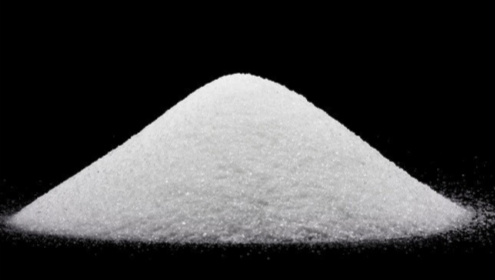
Boric acid is a colorless, flaky, odorless crystalline powder. It is soluble in water, glycerin, alcohol, salt solutions, and mineral acids. In nature, boric acid occurs as the mineral sassolite in some hot springs of volcanic origin, in mineral waters, and in natural brines.
A characteristic feature of boric acid is its ability to color a flame green. In the laboratory, boric acid was first obtained from borax by the chemist V. Homberg in 1702.
Chemical identity
Chemical name: Boric acid
Chemical formula: H₃BO₃
CAS No.: 10043-35-3
EINECS No.: 233-139-2
HS code (TN VED): 2810 00 9000
Packaging
Boric acid is supplied in industrial packaging suitable for bulk logistics:
- 1200 kg polypropylene big bags
- 1000 kg polypropylene big bags
- 25 kg polypropylene bags with internal LDPE liner
Chemical specification (typical)
| Parameter | Typical range |
|---|---|
| Equivalent boric acid (H₃BO₃) | 99.90 – 100.20 % |
| Boron oxide (B₂O₃) | 56.24 – 56.41 % |
| Boron (B) | 17.46 – 17.52 % |
Impurities (typical)
| Parameter | Value |
|---|---|
| Sulfate (SO₄) | ≈ 300 ppm |
| Chloride (Cl) | ≈ 200 ppm |
| Iron (Fe) | ≈ 3 ppm |
Granulometry
| ASTM mesh | Particle size | Retained |
|---|---|---|
| 18 | ≈ 1.0 mm | max. 2.0 % |
Production methods
Boric acid can be obtained by several industrial methods, for example:
- Reaction of sodium tetraborate decahydrate (Na₂B₄O₇·10H₂O, borax) with strong inorganic acids
- Dissolving boron hydrides (B₂H₆) or boron halides (e.g. BCl₃) in water
- Extraction from natural waters using ethanol or polyhydric alcohol mixtures (polyols)
- Recovery from natural brines using organic or mineral sorbents
- Processing of natural borate minerals
Applications
- Raw material for chemical synthesis and buffer systems
- Enamels and frits for ceramics and glass production
- Fiberglass, mineral wool, and other glass / ceramic materials
- Wood treatment compositions (disinfection and protection)
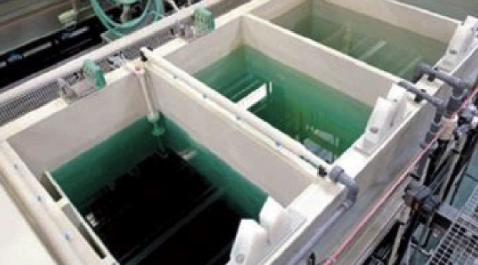
- Electrolytes for electroplating processes
- Photographic fixer and specialized photographic solutions
- Construction mixes and building materials
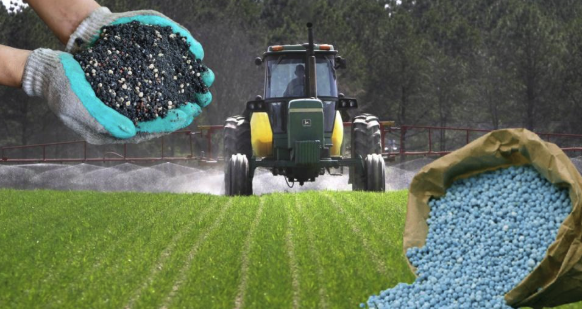
- Boron-containing fertilizers
- Formulations for pest and insect control
Safety, transport and storage
Boric acid is nonflammable and nonexplosive. By its effect on the human body, it belongs to hazard class 3 (moderately hazardous substances). Work with boric acid should be carried out using standard industrial protection:
- Rubber or nitrile gloves
- Respiratory protection in dusty environments
- Protective safety goggles
Boric acid can be transported by rail, sea, river, and road in covered vehicles protecting the product from moisture and contamination. Store in closed warehouses with natural ventilation, in original unopened packaging, away from food products and direct sunlight.
Demand & applications snapshot
The charts below provide an illustrative view of how boric acid is typically distributed across industries and regions. Values are indicative and for presentation purposes only.
Visuals: lab, logistics and product
Online images below are placeholders. Replace the URLs with your preferred real photos (for example laboratory glassware, chemical plant views, or boric acid product packaging).